Dedicated Servers & Hosting
July 7, 2026

The global shift toward cloud computing has accelerated dramatically. Today, an estimated 94% of enterprises use at least one cloud service, and the worldwide cloud computing market is projected to exceed $1.2 trillion by 2027. For businesses in the UAE, where digital transformation is a national priority under initiatives like the UAE Strategy for Artificial Intelligence and Smart Dubai, understanding cloud computing applications is no longer optional it is essential for competitive survival.
Whether you are a startup building your first product or an enterprise migrating legacy systems, the decisions you make about cloud application architecture, hosting, security, and monitoring will define your operational efficiency for years to come. With over 25 years of experience delivering cloud server solutions to UAE businesses, ASPGulf has helped hundreds of organizations navigate this transition. This guide distills that experience into a practical, actionable resource.
A cloud-based application (commonly called a cloud app) is a software program that operates through a combination of local device components and remote cloud-based servers. Unlike traditional desktop software that runs entirely on your computer’s hardware, a cloud application distributes its processing, storage, and logic across internet-connected servers hosted in data centers.
To understand what is a cloud based application at a practical level, consider how you interact with software daily. When you open Google Workspace to edit a document, stream content on Netflix, or manage customer relationships in Salesforce, you are using cloud applications. The user interface loads on your device – whether that is a browser, desktop client, or mobile app – while the heavy lifting of data processing, storage, and computation happens on remote servers.
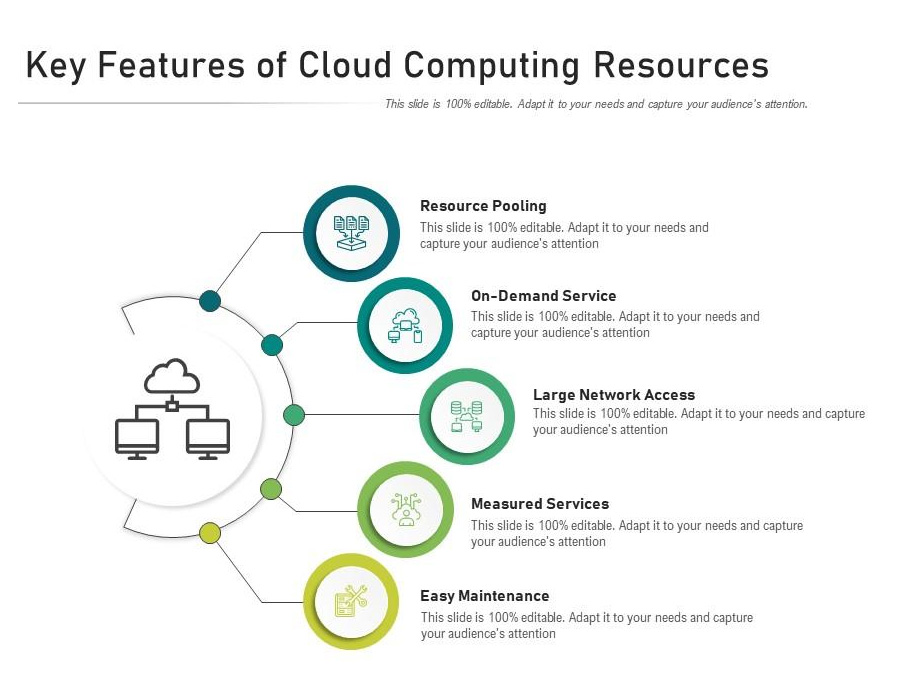
At their core, cloud applications follow a client-server model with a critical difference: the server-side infrastructure is hosted, managed, and scaled in cloud environments rather than on-premises hardware. The application logic typically runs across three layers:
This is the front-end interface that users interact with. It could be a web browser, a native mobile app, or a lightweight desktop client. The presentation layer handles rendering, user input, and local caching to deliver a responsive experience even during network fluctuations.
Also called the business logic layer, this component processes requests, enforces rules, manages workflows, and coordinates data flow between the presentation and data layers. In cloud applications, this layer runs on cloud infrastructure that can scale horizontally to handle varying workloads.
This layer manages persistent storage – databases, file systems, object storage, and caching mechanisms. Cloud applications leverage distributed databases and redundant storage systems to ensure data availability, durability, and performance across geographic regions.
The key advantage of this architecture is flexibility. Because processing happens in the cloud, users do not need powerful local hardware. A lightweight laptop, tablet, or even a smartphone with a stable internet connection can deliver the full functionality of enterprise-grade software. This dramatically reduces hardware costs and eliminates the need for organizations to purchase high-specification machines for every employee.
The distinction between cloud applications and traditional desktop software goes far beyond where the software runs. It fundamentally changes the economics, accessibility, and lifecycle management of business technology.
Traditional applications require significant upfront investment: purchasing software licenses for every user, procuring servers to host applications, and hiring IT staff to maintain the infrastructure. A mid-sized company deploying an ERP system might spend hundreds of thousands of dirhams before a single user logs in. Cloud applications replace this capital expenditure model with operational expenditure. Organizations pay subscription fees – monthly or annually – based on actual usage. There are no large upfront license costs, no server procurement delays, and no depreciating hardware assets on the balance sheet.
Traditional software ties users to specific devices. If your accounting software is installed on a desktop in the office, you cannot access financial reports from home or while travelling. Cloud applications eliminate this constraint entirely. With an internet connection, employees can access their tools from any device, anywhere in the world. For UAE businesses with operations spanning multiple emirates, regional offices, or international branches, this accessibility translates into genuine productivity gains.
With traditional software, updates require manual installation across every machine in the organization – a process that creates version inconsistencies, compatibility issues, and IT overhead. Cloud applications update centrally. When the provider releases a new feature or security patch, every user receives it simultaneously. There is no version fragmentation, no patch management burden, and no downtime for individual workstations.
Organizations running traditional applications must provision and maintain their own servers, storage arrays, and networking equipment. This physical infrastructure consumes office space, requires cooling, draws significant power, and demands ongoing maintenance. Cloud applications offload this entirely to the provider’s data centers. Businesses that previously needed dedicated server rooms can redirect that physical space and those operational budgets toward revenue-generating activities. For companies that need to maintain control over their infrastructure while still leveraging cloud benefits, private cloud solutions offer a balanced approach.
Understanding cloud based applications examples across industries helps illustrate the breadth and depth of what cloud computing makes possible. Here are the major categories of cloud computing applications driving business transformation in the UAE and globally.
SaaS represents the most common type of cloud application that end users interact with daily. These are fully managed applications accessible through a web browser or lightweight client. Prominent examples include Microsoft 365 for productivity and collaboration, Salesforce for customer relationship management, HubSpot for marketing automation, Slack for team communication, and Zoom for video conferencing. UAE businesses across sectors – from real estate firms in Dubai to healthcare providers in Abu Dhabi – rely on SaaS platforms to run their daily operations without managing any underlying infrastructure.
Cloud-based ERP systems like SAP S/4HANA Cloud, Oracle Cloud ERP, and Microsoft Dynamics 365 consolidate finance, supply chain, human resources, and operations into unified platforms. For UAE enterprises navigating VAT compliance, multi-currency transactions, and complex supply chains, cloud ERP eliminates the need to host and maintain massive on-premises systems while ensuring real-time visibility across business functions.
Banking and financial services have embraced cloud applications aggressively. Mobile banking apps, digital payment platforms like Apple Pay and Google Pay, robo-advisory services, and blockchain-based settlement systems all run on cloud infrastructure. In the UAE’s thriving fintech ecosystem, startups and established institutions alike use public cloud services to launch financial products rapidly while meeting regulatory requirements from the Central Bank and financial free zones like DIFC and ADGM.
Electronic health record (EHR) systems, telemedicine platforms, medical imaging analysis tools, and patient portal applications increasingly operate in the cloud. These applications must meet stringent data protection requirements while handling sensitive patient information – making the choice of cloud application hosting provider especially critical for healthcare organizations.
From Shopify and WooCommerce storefronts to custom-built marketplaces, e-commerce is overwhelmingly cloud-based. These platforms handle product catalogues, payment processing, inventory management, and customer analytics –
all requiring elastic scaling to handle traffic spikes during promotions and seasonal events. UAE retailers preparing for events like Dubai Shopping Festival or Ramadan sales depend on cloud infrastructure that can scale instantly to meet demand.
While any application hosted in the cloud qualifies as a cloud application, a cloud native application is specifically designed and built from the ground up to exploit the full capabilities of cloud computing environments. Understanding the difference is critical for businesses planning new application development or modernizing existing systems.
The Cloud Native Computing Foundation (CNCF) defines cloud native technologies as those that enable organizations to build and run scalable applications in modern, dynamic environments – including public, private, and hybrid clouds. A cloud native application is built using four foundational principles:
Instead of building a single monolithic application, cloud native design breaks functionality into small, independent services. Each microservice handles a specific business capability – user authentication, payment processing, inventory management – and can be developed, deployed, and scaled independently. If the payment service needs more capacity during a flash sale, it scales alone without affecting the rest of the application.
Cloud native applications package each microservice and its dependencies into containers using technologies like Docker and Kubernetes. Containers ensure consistent behaviour across development, testing, and production environments. They are lightweight, start in seconds, and enable efficient use of computing resources – a significant advantage over traditional virtual machines.
Container orchestration platforms like Kubernetes automatically manage container deployment, scaling, load balancing, and self-healing. If a container fails, Kubernetes replaces it. If traffic increases, it spins up additional instances. This automation eliminates manual intervention and ensures application resilience.
Cloud native development embraces CI/CD (Continuous Integration/Continuous Delivery) pipelines that automate testing, building, and deploying code changes. Teams can release updates multiple times per day with confidence, enabling rapid iteration and faster time-to-market.
A “lift-and-shift” migration moves an existing application to the cloud without redesigning it. The application becomes cloud-hosted but does not gain cloud native benefits. It still scales as a single unit, requires manual capacity planning, and cannot self-heal from failures. Cloud native applications, by contrast, are built for elasticity, resilience, and operational automation from their inception. For businesses building new applications, adopting cloud native principles from the start delivers significant long-term advantages in scalability, reliability, and development velocity. Leveraging platforms like Amazon Web Services or Microsoft Azure provides the managed infrastructure services that make cloud native development practical and cost-effective.
Understanding how to create a cloud application requires a structured approach that covers planning, architecture, development, deployment, and ongoing operations. Here is the practical framework that ASPGulf recommends to UAE businesses building cloud applications.
Begin by documenting your application’s functional requirements (what it does), non-functional requirements (performance, availability, compliance), and business constraints (budget, timeline, team capabilities). Based on these requirements, select your cloud deployment model. Public cloud services from AWS, Azure, or Google Cloud offer maximum scalability and a pay-as-you-go model ideal for startups and applications with unpredictable traffic. Private cloud deployments provide dedicated infrastructure for organizations with strict data residency or compliance requirements. Multi-cloud strategies distribute workloads across providers to avoid vendor lock-in and maximize resilience.
Decide whether to build a monolithic application (suitable for simpler use cases and smaller teams) or adopt a microservices architecture (better for complex, evolving applications). Design your data layer – choosing between relational databases (PostgreSQL, MySQL), NoSQL databases (MongoDB, DynamoDB), or a combination based on data patterns. Plan your API layer, authentication mechanisms, and integration points with third-party services.
Choose programming languages, frameworks, and tools that align with your team’s expertise and the application’s requirements. Popular cloud application stacks include Node.js or Python with React or Angular for web applications, Swift or Kotlin for native mobile apps, and Go or Rust for high-performance backend services. Select managed cloud services where possible – managed databases, message queues, authentication services – to reduce operational overhead.
Develop the application iteratively using agile methodologies. Implement automated testing at every level – unit tests, integration tests, end-to-end tests, and load tests. Set up CI/CD pipelines using tools like GitHub Actions, GitLab CI, Jenkins, or cloud-native options like AWS CodePipeline and Azure DevOps. Automated pipelines ensure that every code change is tested, validated, and deployable without manual intervention.
Deploy your application to your chosen cloud infrastructure using infrastructure-as-code tools like Terraform or AWS CloudFormation. Configure auto-scaling policies that add or remove computing resources based on demand metrics. Implement load balancing to distribute traffic evenly across application instances. For UAE businesses requiring local data residency, ensure your deployment targets data center regions within or near the UAE.
Post-deployment, implement comprehensive cloud application monitoring (covered in detail below) to track performance, detect issues, and optimize costs. Continuously gather user feedback, analyze usage patterns, and iterate on features. Cloud development is never “done” – it is a continuous cycle of improvement.

Cloud Hosting – Scalable, Secure, and Cost-Effective! Get Started Today!
Selecting the right cloud application hosting platform is one of the most consequential decisions in your cloud journey. The hosting environment directly impacts application performance, reliability, security, and operational costs.
IaaS providers supply virtualized computing resources – virtual machines, storage, and networking – on demand. You manage the operating system, middleware, runtime, and application code. This model offers maximum control and flexibility, making it ideal for organizations with experienced DevOps teams who need granular infrastructure management. ASPGulf’s cloud server solutions provide UAE businesses with IaaS infrastructure backed by local support and data center expertise.
PaaS abstracts the infrastructure layer entirely, allowing developers to deploy code without managing servers, operating systems, or runtime environments. Platforms like AWS Elastic Beanstalk, Azure App Service, and Google App Engine handle provisioning, scaling, and patching automatically. PaaS accelerates development cycles but offers less customization than IaaS.
For organizations that want the benefits of cloud infrastructure without the operational complexity, managed hosting services provide a comprehensive solution. Managed hosting providers handle server configuration, security hardening, patch management, backup scheduling, performance optimization, and 24/7 monitoring. This allows your team to focus entirely on application development and business logic while experts manage the infrastructure.
When evaluating cloud application hosting services, UAE businesses should assess several critical factors. Performance requirements including latency, throughput, and compute capacity should match your application’s workload characteristics. Data residency compliance is essential for organizations handling personal data of UAE residents, with hosting infrastructure ideally located within or near the UAE. Scalability mechanisms – both vertical (adding resources to existing servers) and horizontal (adding more servers) – should support your growth trajectory without over-provisioning. Support responsiveness matters significantly; when a production issue occurs at 2 AM, having access to a managed services team that understands your infrastructure and can respond immediately is invaluable.
Cloud application security is not a single technology or practice – it is a comprehensive strategy that must be woven into every layer of your application architecture, development process, and operational procedures. The shared responsibility model means that while cloud providers secure the underlying infrastructure, organizations are responsible for securing their applications, data, and access controls.
Implement the principle of least privilege across your entire application. Every user, service, and system component should have the minimum permissions necessary to perform its function. Use multi-factor authentication (MFA) for all user accounts, especially administrative and privileged accounts. Implement role-based access control (RBAC) to manage permissions at scale, and regularly audit access logs to detect unauthorized activity.
Encrypt data at rest and in transit without exception. Use TLS 1.3 for all data transmitted between clients and servers, between microservices, and between your application and third-party APIs. Encrypt stored data using AES-256 or equivalent algorithms. Manage encryption keys using dedicated key management services (KMS) provided by your cloud platform, and rotate keys according to your security policy.
Implement input validation and sanitization to prevent injection attacks (SQL injection, cross-site scripting, command injection). Use Web Application Firewalls (WAFs) to filter malicious traffic before it reaches your application. Conduct regular penetration testing and vulnerability scanning. Implement rate limiting and DDoS protection. Follow secure coding practices and integrate static application security testing (SAST) and dynamic application security testing (DAST) into your CI/CD pipeline.
UAE businesses must navigate a complex regulatory landscape that includes Federal Data Protection Law (Federal Decree-Law No. 45 of 2021), sector-specific regulations from authorities like the UAE Central Bank and the Health Authority, and free zone regulations from DIFC and ADGM. Your cloud application security strategy must address data classification, retention policies, cross-border data transfer restrictions, and audit trail requirements. Working with a local hosting provider that understands UAE regulatory requirements simplifies compliance significantly.
No security strategy is complete without a documented incident response plan. Define roles and responsibilities, establish communication protocols, prepare forensic analysis procedures, and conduct regular tabletop exercises. Your cloud application hosting provider should integrate with your incident response plan, providing log access, forensic snapshots, and rapid communication during security events.
Cloud application monitoring provides the visibility necessary to maintain application health, detect issues before they impact users, and optimize resource utilization. Without comprehensive monitoring, you are operating blind – unable to diagnose performance degradation, identify bottlenecks, or predict capacity needs.
Track the health and performance of your underlying cloud infrastructure. Monitor CPU utilization, memory consumption, disk I/O, and network throughput across all servers and containers. Set threshold-based alerts that trigger notifications when resource usage approaches critical levels. Infrastructure monitoring tools like Prometheus, Grafana, CloudWatch (AWS), and Azure Monitor provide dashboards and alerting capabilities that give operations teams real-time visibility.
APM tools provide deep visibility into application behaviour – tracking request latency, error rates, transaction traces, and dependency performance. Tools like Datadog, New Relic, Dynatrace, and open-source alternatives like Jaeger for distributed tracing help developers pinpoint exactly where performance bottlenecks occur. For microservices architectures, distributed tracing is essential for understanding how requests flow across services and identifying latency contributions from each component.
Centralize logs from all application components, infrastructure, and security systems into a unified platform. Tools like the ELK Stack (Elasticsearch, Logstash, Kibana), Splunk, or Loki enable teams to search, correlate, and analyse log data in real time. Structured logging practices – using consistent formats, including correlation IDs, and tagging logs with service and environment metadata – make troubleshooting significantly faster.
Synthetic monitoring simulates user interactions with your application from multiple geographic locations to detect availability issues, latency spikes, and functional failures before real users encounter them. Configure synthetic checks for critical user journeys – login flows, checkout processes, API endpoints – and ensure your monitoring covers regions relevant to your user base, including UAE, GCC, and international locations.
Cloud spending can spiral quickly without visibility. Implement cost monitoring that tracks spending by service, environment, team, and application. Use tagging strategies to attribute costs accurately. Set budget alerts to catch unexpected spending increases. Regularly review resource utilization to identify and eliminate waste – idle instances, oversized databases, unused storage volumes, and unattached resources.
For entrepreneurs and enterprises exploring cloud application ideas, the UAE market presents compelling opportunities driven by government digitalization initiatives, a tech-savvy population, and a business environment that encourages innovation.
Build cloud applications that combine large language models with company knowledge bases to deliver intelligent customer support. UAE businesses across banking, telecommunications, retail, and government services need multilingual AI assistants that handle Arabic and English seamlessly while integrating with existing CRM and ticketing systems.
Develop IoT-connected cloud platforms that monitor and manage building systems – HVAC, lighting, security, energy consumption – in real time. With the UAE’s massive real estate development pipeline and sustainability commitments, cloud applications that optimize building operations present significant market potential.
Create cloud-based platforms that provide end-to-end supply chain tracking using IoT sensors, GPS tracking, and blockchain-verified documentation. The UAE’s position as a global logistics hub – with Jebel Ali Port and Al Maktoum International Airport serving as critical trade nodes – creates demand for sophisticated supply chain visibility solutions.
Build cloud applications that automate compliance monitoring, reporting, and audit preparation for UAE businesses navigating VAT, anti-money laundering (AML), data protection, and industry-specific regulations. Automated compliance tools reduce manual effort, minimize human error, and ensure continuous adherence to evolving regulatory requirements.
Develop cloud platforms that aggregate and analyse healthcare data to support clinical decision-making, population health management, and operational efficiency. The UAE’s healthcare sector is investing heavily in digital transformation, creating opportunities for cloud applications that process medical imaging, genomic data, and patient outcomes analytics.
Explore secure, scalable, and customizable solutions with private cloud. Take control of your IT infrastructure and elevate your business operations today!
Selecting the right partner for cloud application hosting services is as important as choosing the right technology. ASPGulf has been serving UAE businesses for over 25 years, providing web hosting and cloud infrastructure solutions that combine enterprise-grade technology with local market expertise.
ASPGulf operates from UAE-based data centers, ensuring low-latency performance for local users and compliance with UAE data residency requirements. Unlike international providers where support is routed through global call centers, ASPGulf provides direct access to engineers who understand the UAE business environment, regulatory landscape, and technical requirements.
From cloud server deployments and private cloud environments to multi-cloud orchestration across AWS, Azure, and Google Cloud, ASPGulf provides the flexibility to architect hosting solutions that match your application’s specific requirements. Whether you need a single cloud server for a growing SaaS product or a complex multi-cloud environment for enterprise workloads, ASPGulf’s managed services team designs, deploys, and manages the infrastructure.
Cloud applications run around the clock, and so does ASPGulf’s support team. With managed hosting services that include proactive monitoring, incident response, security management, and performance optimization, your team can focus on building great applications while ASPGulf ensures the infrastructure performs reliably.
Whether you are building a new cloud native application, migrating existing workloads, or evaluating cloud application hosting services, ASPGulf’s team is ready to help. With 25+ years of experience, UAE-based infrastructure, and comprehensive managed services, ASPGulf provides the foundation your cloud applications need to perform, scale, and stay secure. Contact ASPGulf today for a free infrastructure consultation and discover how the right hosting partner makes all the difference.









A high traffic dedicated server solves this by giving your site an entire physical machine…
Read more
PHP powers nearly 75% of all websites with a known server-side language, including WordPress, Magento,…
Read more
Data is the backbone of every business in the UAE – from customer records and…
Read moreFrom securing your digital landscape with our top-notch Security Risk Assessment Services to optimizing your cloud journey with certified expertise as a Microsoft Cloud Solution Provider offering Microsoft Azure Services and cutting-edge Office 365 Email Hosting solutions. Elevate your operations with the flexibility of Cloud Server options, explore the efficiency of Multicloud Services and the privacy of Private Cloud solutions. Extend your reach with the reliability of Public Cloud offerings, including Amazon Web Services, Oracle Cloud Managed Service Provider, and Google Cloud Hosting Services. Ensure seamless web hosting with options like Dubai VPS Server, trusted Colocation Hosting Providers, and efficient Shared Web Hosting services. Streamline your communication with our Hosted Call Center Service and experience the power of dedicated resources through Dedicated Server UAE, Windows Server Hosting, and efficient WordPress Hosting. Explore the versatility of Linux Hosting with cPanel and optimize your business processes with Hosted Microsoft Dynamics. Our commitment extends to professional expertise with IT Professional Services, reliable Technical Services, secure Data Replication Services, and robust Data Protection Services. Trust in our capabilities with a state-of-the-art Data Center in Dubai, UAE.
As your trusted Managed Security Service Provider, we offer top-tier services such as Digital Security Forensics, efficient Cyber Incident Response, robust Managed Firewall Services, and reliable Recover-as-a-Service. Ensure the continuous health of your operations with our proactive Remote Monitoring and Management