Why High-Traffic Websites Need Dedicated Server Hosting
A high traffic dedicated server solves this by giving your site an entire physical machine…
Read more
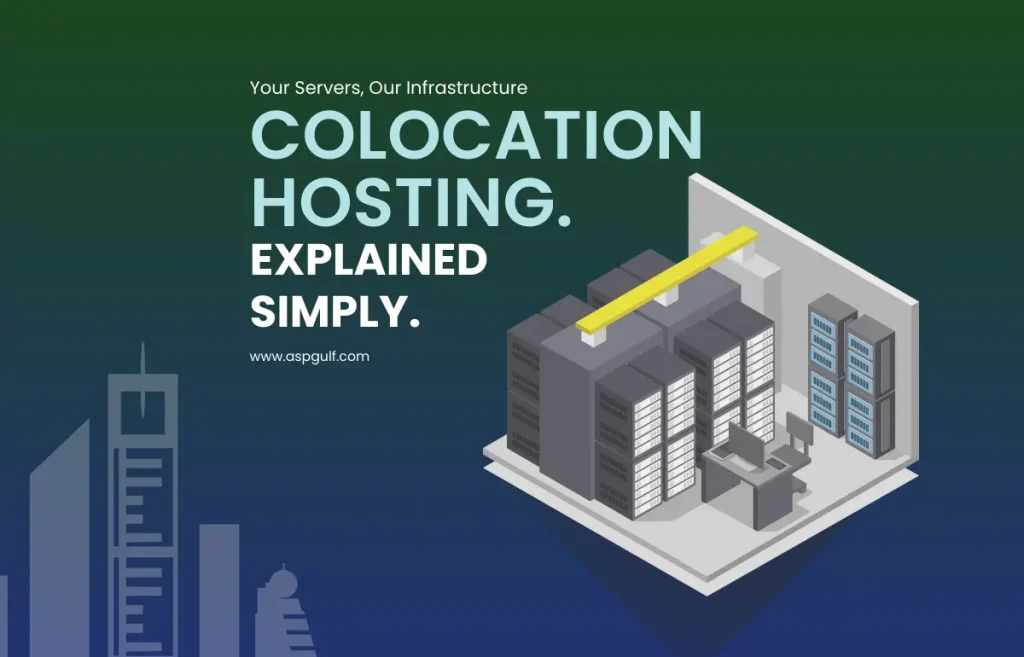
As digital transformation accelerates across the Middle East, UAE businesses face a critical infrastructure decision – where should their servers physically live? For organisations that have outgrown shared hosting but want to retain full control over their hardware, colocation hosting offers a compelling middle ground. It combines the reliability of an enterprise-grade facility with the flexibility of owning your own equipment, and it is quickly becoming the preferred deployment model for companies across Dubai, Abu Dhabi, and the wider Emirates.
In this guide, we break down everything you need to know about colocation hosting explained in practical terms. From how it works and what it costs to why UAE-specific regulations make local colocation an operational necessity, this article will help you determine whether colocation is the right infrastructure strategy for your business.
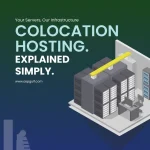
Colocation hosting is a data center service model in which a business places its own physical servers and networking equipment inside a third-party facility. The colocation provider supplies the building infrastructure – power, cooling, physical security, network connectivity, and environmental controls – while the client retains full ownership and administrative access to the hardware itself.
Think of it as renting premium commercial real estate for your servers. You bring the furniture (your hardware), and the landlord provides the building with all essential utilities and security. This arrangement differs fundamentally from other hosting models, and understanding those distinctions is the first step in making an informed decision.
With a dedicated server arrangement, you lease hardware owned by the hosting provider. It is a managed relationship where the provider owns the physical equipment. In colocation, you own the servers outright. You purchase, configure, and maintain the hardware, then place it inside the provider’s facility. This gives you complete control over specifications, configurations, and upgrade cycles without being limited by a provider’s hardware catalogue.
A cloud server environment virtualises resources across shared hardware, offering elastic scalability and pay-as-you-go pricing. Colocation, on the other hand, gives you dedicated physical resources with predictable performance. There is no noisy-neighbour problem, no hypervisor overhead, and no dependency on the virtualisation layer. Many UAE enterprises use both – cloud for variable workloads and colocation for mission-critical applications that demand consistent, low-latency performance.
Building and operating your own data center requires enormous capital expenditure – land, construction, redundant power systems, industrial cooling, fire suppression, physical security, and ongoing maintenance. A colocation facility amortises these costs across all tenants, giving you enterprise-grade infrastructure at a fraction of the build-your-own cost. For most UAE businesses, colocation eliminates the need to invest millions of dirhams in facility construction while still providing the same level of environmental control.
Understanding the operational mechanics of colocation helps demystify the process. Here is how a typical colocation deployment unfolds from contract to production.
Colocation providers offer space in standardised increments. The most common options include individual rack units (measured in U, where 1U equals 1.75 inches of vertical rack space), quarter racks, half racks, full 42U cabinets, and private cages for larger deployments. Your space requirement depends on the volume of equipment you plan to deploy and your projected growth over the contract period.
Once your space is allocated, the provider provisions dedicated power circuits to your cabinet or cage. Power is typically metered and delivered at agreed-upon amperage levels with redundant feeds from independent utility sources. Network connectivity is established through cross-connects to the facility’s carrier-neutral meet-me room, where you can connect to your preferred internet service providers, content delivery networks, or direct peering partners.
You ship or transport your servers, storage arrays, network switches, and firewalls to the facility. Most providers offer remote hands support to assist with physical racking, cabling, and initial power-on. Once installed, you configure the equipment remotely via secure out-of-band management interfaces such as IPMI, iLO, or iDRAC.
Day-to-day management of the operating system, applications, and security remains your responsibility. The colocation provider manages the facility – maintaining optimal temperature and humidity levels, ensuring uninterrupted power through UPS systems and backup generators, monitoring physical security through biometric access controls and CCTV surveillance, and handling network uptime commitments defined in the service level agreement.
Not all colocation facilities are created equal. When evaluating providers, especially for business-critical UAE deployments, understanding what constitutes a well-designed data center in Dubai is essential.
Enterprise colocation facilities use a multi-layered power architecture designed to eliminate single points of failure. This typically includes dual utility feeds from independent substations, automatic transfer switches (ATS) that seamlessly switch between sources, uninterruptible power supply (UPS) systems with battery banks for bridging short outages, diesel generators with sufficient fuel reserves for extended grid failures, and power distribution units (PDUs) that deliver conditioned power to individual cabinets.
Tier III and Tier IV data centres provide N+1 or 2N redundancy, meaning every critical power component has at least one backup. For UAE businesses operating in sectors like finance or healthcare, this level of redundancy is not optional – it is a compliance requirement.
Dubai’s ambient temperatures regularly exceed 45°C in summer, making cooling one of the most critical and expensive aspects of data center operations. High-quality colocation facilities employ precision air conditioning (CRAC/CRAH units), hot aisle and cold aisle containment to maximise cooling efficiency, raised floor or overhead cooling distribution, environmental monitoring with temperature and humidity sensors at the rack level, and redundant cooling systems to maintain operations during maintenance or equipment failure.
A professional colocation facility provides multiple layers of physical security that would be prohibitively expensive to replicate on-premises. Standard measures include 24/7/365 on-site security personnel, biometric access controls such as fingerprint or retinal scanners, man-traps at facility entry points, individual cabinet locking mechanisms, comprehensive CCTV coverage with extended retention periods, and visitor logging with escort requirements.
Carrier-neutral facilities offer the most flexibility, allowing you to choose from multiple network providers and negotiate competitive pricing. Premium colocation data centres provide diverse fibre entry points for physical redundancy, meet-me rooms for direct carrier cross-connects, low-latency interconnection with major cloud providers, and DDoS mitigation at the network edge. Pairing colocation with professional network security services ensures your connectivity is both fast and protected against evolving cyber threats.

So You Can Focus on Growth
While colocation benefits are universal, several factors make it particularly compelling – and in some cases, legally necessary – for businesses operating in the United Arab Emirates.
UAE data protection regulations, including the UAE Federal Decree-Law No. 45 of 2021 on Personal Data Protection, impose strict requirements on where personal data can be stored and processed. The Dubai International Financial Centre (DIFC) and Abu Dhabi Global Market (ADGM) have their own data protection frameworks that mandate data residency within specific jurisdictions. For businesses in regulated sectors – banking, insurance, healthcare, and government – hosting data in a UAE-based colocation facility is the most straightforward path to compliance.
The Telecommunications and Digital Government Regulatory Authority (TDRA) establishes standards for data center operations within the UAE. Colocation facilities that comply with TDRA guidelines provide documented assurance that your infrastructure meets national regulatory expectations, simplifying audit processes and reducing compliance risk.
UAE Central Bank guidelines require financial institutions to maintain primary data processing within the country. Dubai Health Authority (DHA) regulations specify data residency requirements for patient health records. Government entities must comply with UAE Information Assurance (IA) Standards. Using a compliant colocation facility addresses all of these requirements simultaneously.
The UAE’s strategic position between Europe, Africa, and Asia makes Dubai an ideal hub for businesses serving customers across multiple time zones. A colocation deployment in Dubai provides sub-10ms latency to the wider GCC region, excellent connectivity to South Asia and East Africa, direct submarine cable access through landing stations in Fujairah, and growing interconnection with major hyperscale cloud regions. For businesses running real-time applications – trading platforms, video streaming, online gaming, or IoT platforms – this low-latency positioning is a significant competitive advantage.
Operating server infrastructure in the UAE’s desert climate presents unique challenges. Ambient temperatures exceeding 50°C, high humidity levels near coastal areas, sandstorms, and the associated dust infiltration can rapidly degrade unprotected hardware. A purpose-built colocation facility is engineered to manage these environmental factors with precision cooling, air filtration systems, and climate monitoring that would be extremely costly to maintain in an office-based server room.
While the UAE’s power grid is generally reliable, power quality fluctuations can damage sensitive server hardware. Colocation facilities provide conditioned, uninterruptible power with multiple layers of backup. Additionally, data centres benefit from commercial power rates and energy-efficient cooling designs that reduce per-kilowatt costs compared to running servers in an office environment. Over a three to five year period, the total cost of power in a colocation facility is typically 30 to 40 percent lower than an equivalent on-premises setup.
The UAE colocation benefits extend across financial, operational, and strategic dimensions. Here is a detailed breakdown of the advantages that matter most to growing businesses in the Emirates.
Building a data center from scratch in the UAE involves substantial costs. Land acquisition in commercial zones, construction to meet Tier III or IV standards, procurement of power and cooling infrastructure, and ongoing facility management staff represent a multi-million dirham investment. Colocation converts this enormous capital expenditure into a predictable monthly operational expense, freeing up capital for core business investments.
Consider a mid-sized UAE enterprise running 10 server cabinets. Building a private facility would require approximately AED 5 to 8 million in construction costs, AED 1 to 2 million annually for facility operations and staff, and ongoing capital replacement cycles for power and cooling systems. A comparable colocation deployment would cost approximately AED 15,000 to 30,000 per month depending on power density and connectivity requirements – representing savings of 40 to 60 percent over a five-year period.
Colocation providers invest heavily in redundancy because their business model depends on uptime. Leading colocation hosting providers offer 99.99% or higher uptime SLAs backed by financial credits. This level of availability – equivalent to less than 53 minutes of downtime per year – is extremely difficult and expensive to achieve with an on-premises setup. For UAE businesses where every minute of downtime translates to lost revenue and reputational damage, this reliability premium is a worthwhile investment.
Business growth should not require infrastructure migration. With colocation, scaling is as simple as provisioning additional rack space, power, and connectivity within the same facility. You can start with a quarter rack, expand to a full cabinet, and eventually move into a private cage – all without physically relocating your equipment or experiencing service interruptions. This scalability is particularly valuable for UAE businesses experiencing the rapid growth that characterises the region’s economy.
The physical security measures in a professional colocation facility exceed what most businesses can implement independently. When combined with robust managed IT services for logical security, colocation provides a comprehensive security framework that addresses both physical and cyber threats. This dual-layer approach is increasingly important as UAE businesses face growing regulatory scrutiny around data protection and cyber resilience.
Colocation facilities are designed to operate through adverse conditions. Earthquake-resistant construction, fire suppression systems, flood mitigation measures, and extended generator fuel reserves ensure your infrastructure remains operational when external conditions deteriorate. Many UAE businesses use colocation as a primary component of their disaster recovery strategy, maintaining production systems in one facility and replication targets in a geographically separated location.
Carrier-neutral colocation facilities provide access to a diverse ecosystem of network providers, internet exchanges, and cloud on-ramps. This connectivity richness enables you to optimise routing for different traffic types, negotiate competitive bandwidth pricing through multi-provider competition, establish low-latency private connections to major cloud platforms, and connect directly with business partners and customers through peering arrangements.
Colocation is not the right fit for every organisation. It is most beneficial for specific business profiles and use cases that align with the model’s strengths.
Small and medium enterprises that have outgrown basic hosting in the UAE but lack the resources to build dedicated facilities find colocation an ideal stepping stone. It provides enterprise-grade infrastructure without enterprise-grade capital requirements, allowing growing businesses to compete on a level playing field with larger competitors.
Banks, insurance companies, healthcare providers, and government entities operating under strict data residency and security requirements benefit from colocation’s combination of physical security, documented compliance certifications, and in-country data hosting.
Software companies serving UAE and regional customers need reliable, low-latency infrastructure. Colocation provides the performance consistency and network flexibility that virtual environments sometimes cannot match, particularly for latency-sensitive applications.
Many UAE enterprises operate hybrid architectures, combining colocated hardware for persistent workloads with private cloud environments for variable workloads. Colocation facilities with direct cloud connectivity make this hybrid approach operationally efficient, as data can move between physical and virtual environments with minimal latency.
Organisations running specialised workloads – high-performance computing, GPU-intensive machine learning training, large-scale databases, or real-time analytics – often require specific hardware configurations that cannot be accommodated by standard cloud offerings. Colocation allows complete freedom in hardware selection and configuration.
Selecting a colocation partner is a long-term commitment. The following evaluation criteria will help you make a decision that supports your business objectives for years to come.
Look for providers with independently verified certifications including Uptime Institute Tier III or Tier IV certification, ISO 27001 for information security management, SOC 2 Type II for service organisation controls, PCI DSS compliance for payment card data, and TDRA compliance for UAE regulatory alignment. These certifications are not marketing decorations – they represent audited adherence to operational standards that directly affect the safety and availability of your infrastructure.
Modern server hardware, particularly high-density compute and GPU systems, demands significantly more power per rack than legacy equipment. Ensure your provider can accommodate your current and projected power requirements. Ask about per-cabinet power limits (measured in kilowatts), redundancy level (N+1 or 2N), metering accuracy and billing granularity, and the ability to increase power allocation without relocating equipment.
Verify that the facility offers carrier neutrality with multiple upstream providers, direct connectivity to UAE Internet Exchange (UAE-IX), cloud connect services for AWS, Azure, and Google Cloud, low-latency connectivity to regional markets, and sufficient bandwidth headroom for growth. Effective cloud infrastructure management depends on reliable, high-performance connectivity between your colocated hardware and any cloud components of your architecture.
Scrutinise the SLA carefully. Key metrics to evaluate include uptime guarantee (target 99.99% or higher), power availability commitments, temperature and humidity maintenance ranges, incident response times, credit mechanisms for SLA breaches, and escalation procedures.
Even with remote management capabilities, you will occasionally need physical access to your equipment. Evaluate the provider’s remote hands response times and availability, physical access policies and procedures, support for hardware replacement and troubleshooting, and managed hosting services options for organisations that want to offload operational management of their colocated hardware.
Choose a provider with sufficient capacity to accommodate your growth. Ask about available expansion space, the process and timeline for provisioning additional capacity, whether you can start small and expand incrementally, and contract flexibility for changing requirements.
Cloud Hosting – Scalable, Secure, and Cost-Effective! Get Started Today!
Even experienced IT teams can make costly errors when transitioning to colocation. Awareness of these common pitfalls will help you avoid them.
Provisioning insufficient power is the single most common colocation planning mistake. Always calculate power requirements based on peak load, not average utilisation, and include headroom for growth. Factor in the power consumption of networking equipment, storage arrays, and any planned hardware refreshes over the contract period.
A single network connection to your colocation facility creates a critical single point of failure. Invest in dual diverse connections from different carriers entering the building through separate fibre paths. The marginal cost of a second connection is minimal compared to the business impact of a network outage.
Ensure every server has out-of-band management (IPMI, iLO, iDRAC) configured and accessible before racking the equipment. Without remote management, every troubleshooting scenario requires either a site visit or a remote hands request, both of which introduce delays.
Deploy your own environmental monitoring in addition to the facility’s systems. Independent temperature, humidity, and power monitoring at the cabinet level gives you early warning of localised issues and provides audit evidence for compliance purposes.
Colocation solves many availability challenges, but a single facility still represents a geographic single point of failure. Complement your primary colocation deployment with off-site backups or replication to a secondary location. A comprehensive approach to business continuity should consider both local and geographically distributed redundancy.
The cheapest colocation provider is rarely the best value. Evaluate the total cost of ownership including power efficiency, connectivity costs, support quality, and the operational impact of downtime. A provider offering lower rack rates but inferior uptime or limited connectivity may cost significantly more in lost productivity and revenue over the contract term.
Understanding colocation pricing structures helps you budget accurately and compare providers on a like-for-like basis.
UAE colocation pricing typically includes several standard components. Rack space rental is charged monthly based on the amount of space occupied, whether measured in rack units, partial cabinets, or full cabinets. Power is billed based on committed or metered consumption, usually measured in kilowatts. Network connectivity costs cover cross-connects, bandwidth, and IP address allocations. There is typically a one-time setup fee covering initial provisioning, and optional remote hands services may be included or billed per incident.
While prices vary by provider, facility tier, and specific requirements, indicative monthly ranges for the Dubai market include approximately AED 800 to 1,500 per rack unit, AED 5,000 to 10,000 per quarter rack, AED 8,000 to 18,000 per half rack, and AED 15,000 to 35,000 per full 42U cabinet. These ranges include standard power allocations and basic connectivity. High-density power requirements, premium connectivity, and additional services will increase costs accordingly.
When comparing colocation quotes, ask about potential additional charges for power overages beyond committed allocation, cross-connect installation and monthly recurring fees, IP address blocks, remote hands beyond any included allowance, bandwidth overages or burstable pricing structures, early termination penalties, and hardware delivery receiving and staging fees.
The UAE colocation market is evolving rapidly, driven by technological innovation and changing business requirements. Several trends are shaping the industry’s near-term direction.
As IoT deployments grow across UAE smart city initiatives, edge colocation facilities are emerging closer to data sources. These smaller, distributed facilities provide ultra-low-latency hosting for real-time applications in industrial automation, autonomous vehicles, and smart building management.
UAE data centers are increasingly focusing on energy efficiency and sustainability. Solar-powered facilities, innovative cooling technologies adapted to desert climates, and carbon offset programmes are becoming competitive differentiators as enterprises prioritise environmental responsibility in their vendor selection.
Colocation facilities are becoming interconnection hubs where physical and cloud infrastructure converge. Direct cloud on-ramps, software-defined networking, and multi-cloud management platforms are making it easier for UAE businesses to operate seamlessly across colocated hardware and multiple cloud environments.
Growing demand for AI workloads is driving investment in high-density colocation capable of supporting GPU clusters with power densities of 20kW or more per rack. UAE colocation providers are expanding capacity to serve the region’s growing AI ecosystem, supported by government initiatives like the UAE National Strategy for Artificial Intelligence.
If you have determined that colocation aligns with your business needs, the following checklist will guide your deployment planning.
With over 25 years of experience serving businesses across the Middle East, ASPGulf operates a state-of-the-art data center in Dubai designed to meet the most demanding colocation requirements. Our facility delivers Tier III certified infrastructure with redundant power, cooling, and connectivity, full compliance with UAE data protection regulations and TDRA standards, carrier-neutral network connectivity with direct access to major cloud platforms, 24/7/365 on-site technical support and remote hands services, and flexible space configurations from single rack units to private cages.
Whether you are migrating from an on-premises server room, expanding your existing colocation footprint, or deploying a hybrid architecture that combines physical hardware with our cloud server and private cloud solutions, ASPGulf provides the infrastructure foundation your business needs to thrive in the UAE’s competitive digital economy.
Ready to explore colocation hosting for your UAE business? Contact ASPGulf today to schedule a data center tour and receive a customised colocation proposal tailored to your specific infrastructure requirements and growth objectives.



A high traffic dedicated server solves this by giving your site an entire physical machine…
Read more
PHP powers nearly 75% of all websites with a known server-side language, including WordPress, Magento,…
Read more
Data is the backbone of every business in the UAE – from customer records and…
Read moreFrom securing your digital landscape with our top-notch Security Risk Assessment Services to optimizing your cloud journey with certified expertise as a Microsoft Cloud Solution Provider offering Microsoft Azure Services and cutting-edge Office 365 Email Hosting solutions. Elevate your operations with the flexibility of Cloud Server options, explore the efficiency of Multicloud Services and the privacy of Private Cloud solutions. Extend your reach with the reliability of Public Cloud offerings, including Amazon Web Services, Oracle Cloud Managed Service Provider, and Google Cloud Hosting Services. Ensure seamless web hosting with options like Dubai VPS Server, trusted Colocation Hosting Providers, and efficient Shared Web Hosting services. Streamline your communication with our Hosted Call Center Service and experience the power of dedicated resources through Dedicated Server UAE, Windows Server Hosting, and efficient WordPress Hosting. Explore the versatility of Linux Hosting with cPanel and optimize your business processes with Hosted Microsoft Dynamics. Our commitment extends to professional expertise with IT Professional Services, reliable Technical Services, secure Data Replication Services, and robust Data Protection Services. Trust in our capabilities with a state-of-the-art Data Center in Dubai, UAE.
As your trusted Managed Security Service Provider, we offer top-tier services such as Digital Security Forensics, efficient Cyber Incident Response, robust Managed Firewall Services, and reliable Recover-as-a-Service. Ensure the continuous health of your operations with our proactive Remote Monitoring and Management